London 1904
Sunday, 30 December 2007
C1918
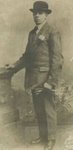
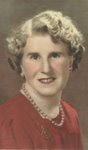
It is F.A.I. and my dear granny, I am thinking it could be their wedding photograph or at very least an engagement one.
Friday, 28 December 2007
72. 1919
(and I mean very brief, you have never seen two people copy images so fast with one of the curators saying ‘we are closing now’ ‘just one more please’ were our cries.)
I had been scrolling through Merchant sea records under the family surname looking at ID photos to see if there were any family resemblances. Suddenly I saw a chap that was definitely my family it was F.A.I’s eldest brother Edward. Surely it couldn’t be him as he had been in Australia since at least 1911? It was him! Edward Charles born London 1880. The records showed he had sailed on the Nestor as a steward on 17th May 1919.
The only explanation I can think of was he served over here in WW1 and was on his way back home to Australia. More research is needed on this one.
I carried on scrolling across and came across F.A.I. born 1886 (2 years out) in London.
It showed he had sailed twice on the same ship 131329 on the 11th September and 18th November 1919.
This is an excellent site for maritime shipping through it I found that he was back sailing on the Hildebrand, the ship he sailed on in 1911, I wonder if he went to Paraguay on these occasions too
The other event of 1919 was that his dear brother Arthur’s war medal was sent home to the address in Vincent Road in Croydon. His French Auntie Matilda was still living there until 1923 so she would have had receipt of them but where it ended up is anyones guess
71. 1918
F.A.I. must have had some shore leave and they wed in January at granny’s home in Duke Street, Edinburgh. I note from a clipping kept of the Edinburgh Evening News that many of the happy couples of that time also married at residential addresses. Maybe that was the done thing then with so many people wanting to get married at short notice.
On the wedding certificate F.A.I. is noted as a Gunner Royal Navy aged 32 (he was 33), granny is noted as a laundry maid aged 27. His date of birth was often mis-described. When he joined up to serve King and Country his year of birth was noted 1885 and later when he rejoined the merchant Seaman it was 1886, but his birth certificate says 1884.
As a family researcher I was glad they were married in Scotland as the Scottish Certificates give you mother’s maiden name, on birth certificates the time of birth and other information that is sadly lacking on English Certificates. Unfortunately this time as well as having F.A.I.’s age wrong, both mothers maiden names were also wrong. Luckily I already had this information, although with his mother Caroline, it did take an awful long time to discover the truth.
The marriage was carried out by the Rev Donald of Albany Street Church, Edinburgh, (sadly now a block of offices)
I would suspect that there wasn’t any proper honeymoon, as F.A.I. would have been called to Duty straight afterwards and certainly by his birthday in early February there is a Birthday card sent to him on the H.M.S. Settsu.


The next one is dated 26th April 1918 to granny
H.M.S. Settsu No650 this address is good
C/o Flagstaff
Devonport
26 April
Dear Wife
I had your letter of the 15th waiting for me this morning I was so pleased. There was one from Ethel and some letters from Mr Taylor and boys
The rest are going to leave tonight. Lovely weather – will write you all news so be happy as you understand me will send them all cards soon also May & Bella. Now dear take care of yourself till my next leave. All my love your F xxxxx


On the 1st May he received a postcard from a friend called Bill from Melrose. Melrose is where my dear granny was born.
Dear F
You will be thinking I am a fine one not letting you know I got your PC alright & was very please with them so & hope you will get this one also & I hope it won’t be long an you are back here again & was to tell you the chap was asking for you from your friend Bill


The other postcard I have of that year is one to his new bride. I wonder how often and how proud he was to address the person as Mrs F.A.I.
This was for granny's Birthday
Friday, 9 November 2007
11th hour of the 11th day of the 11th month
The losses of life in WW1 were sadly unnecessary in most respects but it was a different time a different place where values were different too.
To fight for your Country was what you did, you were called and you went.
F.A.I. did his bit at sea, his brother joined the Army and fought in France/Belgium. F.A.I. survived.
If he hadn't then I wouldn't be here.
Not the same story for his brother Arthur St. John. he was killed in January 1916.
I have been unable to find what battle he fell. He could have been injured for a while before he died, he was 24 years of age.
My other Grandfather also lost a brother too. John Edward.
He was married, he was shot in the jaw and died 10 days later. The day before he died his wife gave birth to their daughter Alice. He would have known he was to be a father but never saw his child.
So to all the brave people that have fought for our freedom whether it be almost 100 years ago or more recently in Iraq, Afghanistan and the like, I would like to say a big Thank you. You are brave and unique.
John Edward


Arthur St. John
Saturday, 29 September 2007
70. 1917 Now were was I?
All my paperwork and research have been tidied away into a new small shiny filing cabinet & I can’t find a thing.
To assist in bring my mind back to him I have been looking at what happened in 1917.
He was away sailing and doing his bit for King and Country where ever on the H.M.S Settsu and granny was a laundry maid in Edinburgh.
The first slice of 1917 I have come across was the Silvertown Explosion on 19th January 1917. Silvertown is in West Ham, Essex. The explosion happened in a munitions factory, which was producing explosives for WW1. Approximately 50 tonnes of TNT exploded.
It killed 73 people and injured over 400. 70,000 properties were damaged and 900 were wiped out completely.
Two years into the war Britain was facing a huge shortage of munitions so the Government commandeered the surplus manufacturing capacity of the factory, that manufactured caustic soda and soda crystals, to make TNT.
Despite the factory being in an extensively residential area it was deemed at the time to not be of risk.
I imagine it wasn’t the nicest places to work if you think about the lack of safe guards in place in Victorian built factories. The Factory Acts had been introduced and the 1844 Act specified that children between the ages of 8 and 13 could not work longer than 6 ½ hours per day either in the morning or afternoon, no child being allowed to work in both on the same day, except on alternate days, and then only for ten hours. Young persons and women (now included for the first time) were to have the same hours, i.e. not more than twelve for the first five days of the week (with one and a half out for meals), and nine on Saturday.
So with most of the men fighting in the war the factory would have been predominantly staffed with women and children.
The explosion was caused by a fire in the factory (probably someone having a sly ciggie break out the back). As most of the TNT had been loaded into train wagons awaiting dispatch the debris was strewn for miles firing red hot chucks of metal from the carriages. The damage was estimated at £2.5 million pounds (huge amount those days but the price of an apartment that probably stands not so far from the site these days!!)
As FAI came from this ‘neck of the woods’ I am sure this piece of news interested him, he would have known the area and maybe even known someone who worked there.
February 13th 1917 – Mata Hari was arrested for spying.
I think FAI would have definitely noticed this on he had a love of the stage girls (as we have seen with his collection of postcards) and I guess Mata didn’t slip his attention either.Mata Hari was born Margaretha Geertruida Zelle I 1876 in Holland. In 1905 she became Mata Hari an exotic dancer. She posed as a princess from Java pretending to have been initiated into the art of sacred Indian dance since childhood. How wonderful she kidded everyone. It is a kin in my eyes to my great great grandfather being a Professor of Languages after living Brittany for 6 years. It would have been so easy to kid people then as forms of communication where not as they are now nor where the public as educated.
During WW1 Holland was neutral which meant Mata could travel freely across borders.
To avoid the theatres of war she took varied routes. She would travel to France from Holland via Spain and Britain. This of course caused suspicion. Also she was known to be the courtesan to may high ranking military officials at the time.
It is not known if at the time of arrest the tales she said were true or fiction. It was concluded, however, that the German spy H-21 was Mata Hari and she was executed by firing squad on 15th September 1917.

From this brief encounter with Mata Hari, I am intrigued to dig deeper, there are many conspiracy theories about her.
Her body was never claimed by anyone and was reportedly used for medical science. Her head was embalmed and kept in the Museum of Anatomy in Paris but mysteriously has disappeared circa 1954. The rest of her should be there too but non of her remains can be found
Monday, 13 August 2007
69. 1917
Maybe he had a bit of a 'ruck' with Gran
They haunt me aye by night from morn till dewy night
They dim my ear with echoes drear they give me no reprieve
Their grim shapes rise before mine eyes alike in bath or bed they rob
My breast of all its rest those things I might have said
The smart reply, the timely lie, the plausible, the cutting jest
The sally direct in eloquent abuse –now one and all without my call
Hit madly through my brain, months and months to late for
Chance or fate to stage the scenes again why should it be
When maud twits at me that I but stand and stare and rack my mind
In vain to find the quip that is there; my brain is blank
My words are blank reply I cannot see yet where she fled
My timberhead just teems with repartee
Time moves to fast my wits out classed it cannot
Last the pace, my bat like eyes cannot decry what stares
Me now in the face. Wherefore the more I ponder o’er
The moments that have sped the more I wail without avail
The Things I Might have Said
F.A.I 1917
Saturday, 11 August 2007
68. Somewhere during his time at sea C1917
Certainly I feel these next two writings were whilst he was at sea. They were written on very light, fine paper whether they are copied or are from the heart I don't know.
The first is about the Royal Naval Division and their limbo state between being sailors and land soldiers
Royal Naval Division ‘Winston Churchill’s Own’
Buffeted about from Antwerp to Gallipoli, Egypt, the Greek Islands Salonika and then to France. First under an Admiral then part of an army corps, again under an Admiral and finally back to military regime- the life of The Royal Naval Division which startled an Empire by their valor on the Ancre, has been one of the full thrills, sorrows, threats of extinction, brave deeds and perilous journeys. They are proud of their Naval origin and are also tenacious of their Naval customs, despite that all their fighting has been done ashore.
In August 1914 Mr Winston Churchill, their first Lord of the Admiralty, mobilised and organised as a diversion for Land fighting reservist seamen stokers and marine and naval volunteers, whose services were not required afloat. Also recruits drawn mainly among the miners of the North of England and Scotland.
To the Navy, who needed them sometimes for the fleet, they were just ‘Dry Land Sailors’. To the Army, they were just a bunch of ‘so called Salts’ or ‘Winston’s Own’. But their instructors soon recognized that in these growing middle age stokers and their stolid miners and ironworkers etc from the North Country, they had the raw material of soldiers as fine as Great Britain can breed. In many respects the Division as had the worst of both worlds. They have beaten their way to the foe without much recognition in print but since Beaucourt fell, both military and Naval men have been eager to grasp them hard.
Now and again a brief mention fell to them lot while they were in Gallipoli, where the military were attracted to them a bit, by the idea calling their Battalions after famous Admirals such as Nelson, Drake, Hood, Benbow and Hawke etc.
Sir Ian Hamilton made mention of the fearlessness of the Division in his dispatches in June 1915. The Collingwood Battalion was wiped out, of the Officers of the Battalions and out of the Hood who went to the attacks not one returned unwounded. The other Battalions also suffered terribly having been equally contemptful of danger. Prior to that they had of course been to Antwerp. Even if that they did not have an alliance to do much, the Division any rate caused the Belgians to hold out for 5 days longer than they might otherwise had done, reverting to the Division again it should been said that of every officer of these Jolly Jack Tars.
Soldiers have panegyrics galore to cast in the direction of General Archibald Paris HCB, who was in Command of the Divisions at Antwerp and the Dardanelles. He lost a leg before the Ancre fighting and was disappointed of not being with them for their great success in France.
He was succeeded by Major General Cameron Shute CB.
What the Division has recently accomplished and the way it has terrorized the enemy like Kiplings ‘Tyneside Tail Twisters’ is a happy thought to General Shute, in one Battalion it is estimated that 90 per cent of the casualties in the Ancre fighting were caused by the closeness with which the Dry Land Sailors clung to the barrage fire. Their grit caused the enemy to pale. They are pleased and proud of their sea terms and would not give them up for anything – not even if the Soldiers of the King do not fathom their meaning. It is a case of going to the galley while the Red Coat, that was, persists in the kitchen. The first field station or otherwise dressing station is nothing but Licte (??)Bay to the R.N.D. man. They go adrift when they are missing from parade and they ask to ‘go ashore’ when they want to leave. It has to be borne in mind that Lieutenant Commander A.M. Asquith, son of the former British Premier, was one of the men attached to the Hood Battalion, who has been through the thick of many fights and has been wounded more than once, escaping death through sheer good fortune.
F.A. I.
Late of R.N.D.